Partial & Full Dentures
← Return to Our ServicesAt Plantation Dental in Plantation, we help patients rebuild confident, comfortable smiles with custom partial and full dentures. Whether you are missing a few teeth or replacing a full arch, our team designs each appliance for a natural look and a secure, comfortable fit. We will walk you through every option so you can choose the solution that fits your needs, your lifestyle, and your budget.
How missing teeth affect your smile, your health, and your outlook
Missing teeth do more than change how your smile looks. Gaps can make chewing certain foods difficult, affect how you speak, and place extra strain on the teeth that remain. Over time, the jawbone beneath an empty space can shrink, which may alter the shape of your face.
There is an emotional side as well. Many people feel self-conscious about gaps and begin to hide their smile in photos or conversations. Replacing missing teeth helps protect your oral health while giving you the freedom to eat, speak, and smile with confidence again.
What are dentures?
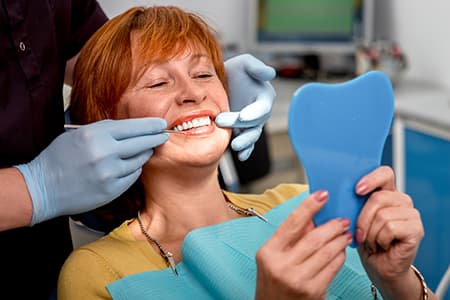
Dentures are removable appliances that replace missing teeth and the surrounding tissue. Each one is custom made with natural-looking artificial teeth set into a gum-colored base that rests comfortably in your mouth.
They are a practical and cost-effective way to restore both function and appearance. Modern dentures are crafted to look natural and fit securely, making everyday activities like eating and speaking feel comfortable again.
Types of Dentures
There is no single denture that suits everyone, so we offer several options based on how many teeth are missing and the condition of your gums and jaw. The two main categories are full dentures, which replace an entire arch of teeth, and partial dentures, which fill in the gaps when some natural teeth remain.
Within these categories you will find variations such as conventional, immediate, overdenture, and implant-supported designs. We will help you understand the differences and recommend the choice that best fits your situation.
Full Dentures
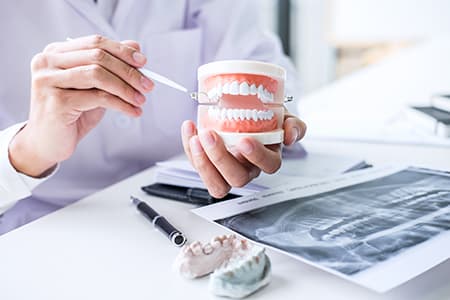
Full dentures replace all of the teeth in the upper arch, the lower arch, or both. They rest directly on the gums and are designed to restore a complete, natural-looking smile.
With a properly fitted full denture, you can comfortably chew a wider range of foods and speak more clearly. We take careful measurements so the finished appliance feels secure and looks like your own teeth.
Conventional Full Denture
A conventional full denture is made after any remaining teeth have been removed and the gum tissue has had time to heal. This healing period allows the denture to fit snugly against gums that have settled into their final shape.
Because the fit is based on healed tissue, a conventional denture often provides excellent stability and comfort once it is placed.
Immediate Denture
An immediate denture is prepared in advance and placed on the same day your teeth are removed, so you never have to go without teeth during healing. This lets you maintain your appearance and resume normal activities right away.
Because your gums and bone change shape as they heal, an immediate denture usually needs adjustments or a reline over the following months to keep the fit comfortable and secure.
Overdenture
An overdenture fits over a small number of retained natural tooth roots or over dental implants. Keeping these roots in place helps preserve the jawbone and adds extra support and stability to the appliance.
This design can make the denture feel more secure and improve your ability to chew compared with a denture that rests on the gums alone.
Implant-Supported Dentures
Implant-supported dentures attach to dental implants placed in the jawbone, giving the appliance a firm, reliable anchor. This added security reduces slipping and lets you eat and speak with greater confidence.
Because implants help stimulate and preserve the bone, this option can also support long-term oral health. We will let you know whether you are a good candidate for implant support.
Partial Dentures
Partial dentures are an option when you still have some healthy natural teeth. They fill the gaps left by missing teeth and are typically held in place with clasps that attach to the surrounding teeth.
Beyond restoring your smile, a partial denture helps keep your remaining teeth from shifting out of position. It is a removable, conservative way to complete your bite and improve everyday function.
Providing integrated solutions to rebuild smiles
Every denture we create begins with a thorough evaluation of your teeth, gums, and overall oral health. From there, we design and fabricate an appliance tailored to the unique shape of your mouth and the look you want to achieve.
Our goal is a result that feels like a natural part of you. By combining careful planning with quality materials, we work to deliver dentures that restore both comfort and confidence.
What To Expect When You Receive Your New Denture
Getting used to a new denture takes a little time, and that is completely normal. In the first days and weeks you may notice some new sensations as your mouth adjusts to the appliance.
The sections below explain what many patients experience during this period and offer simple tips to help you settle in comfortably. With a short adjustment period, most people find their denture becomes a natural part of daily life.
Adjusting to wearing a new denture
When you first wear a denture, it may feel bulky or loose until the muscles of your cheeks and tongue learn to hold it in place. Minor soreness or irritation can also occur as your gums get used to the appliance.
These feelings usually fade within a few weeks. If a sore spot persists, let us know so we can make a quick adjustment for a more comfortable fit.
More saliva than usual
It is common to produce extra saliva when you first start wearing a denture, because your mouth recognizes it as something new. This is a normal, temporary response.
As your mouth adapts over the following days, saliva flow returns to its usual level and the denture begins to feel like a natural part of your mouth.
Speaking with ease
Certain words may sound or feel different at first while your tongue adjusts to the new denture. Practicing by reading aloud can help you regain clear, natural speech more quickly.
Most people speak comfortably within a short time. If the denture clicks or shifts when you talk, a small adjustment can often resolve it.
Getting used to eating with a denture
When you begin eating with a denture, start with soft foods cut into small pieces and chew slowly using both sides of your mouth. This helps keep the denture stable and makes the transition easier.
As you grow more confident, you can gradually add other foods back into your diet. Take your time, and chewing will soon feel natural again.
Taking care of your dentures
Good daily care keeps your dentures clean, fresh, and long-lasting. Brush them each day with a soft brush and a non-abrasive cleanser, and rinse them after meals to remove food particles.
When you are not wearing them, store your dentures in water or a recommended soaking solution so they do not dry out. Most patients also remove their dentures overnight to give the gum tissue a chance to rest.
Added stability
If a denture feels loose or shifts during the day, there are ways to improve its hold. Denture adhesives can provide extra confidence, while implants or retained roots can offer a more permanent solution.
We are happy to discuss which options would give you the most secure and comfortable fit for your daily routine.
Follow-up care
Regular checkups remain important even after you receive your dentures. At these visits we examine the fit of your appliance and check the health of your gums and any remaining teeth.
Routine follow-up helps us catch small concerns early and keep your denture comfortable. It also gives us a chance to monitor your overall oral health over time.
Relines
Your gums and jawbone naturally change shape over the years, which can affect how well a denture fits. A reline refreshes the inner surface of the denture so it once again sits snugly against your gums.
Relining is a routine way to restore comfort and stability without replacing the entire appliance. We will let you know when a reline may help keep your denture fitting its best.
Frequently Asked Questions
Insurance & financing
Quality care that fits your budget
We accept most major PPO plans and verify your benefits before your visit. Prefer to spread the cost? Flexible financing keeps treatment as low as $X/mo.
Insurance accepted
- Delta
- BlueCross BlueShield
- Humana
- MetLife
- Aetna
- Cigna
Financing partners
- Sunbit
- LendingCart
- CareCredit
- Cherry
Ready to schedule your visit?
Our Plantation team is here to help you smile with confidence. Request an appointment or give us a call today.
Office Hours
| Monday | 9:00 am – 5:00 pm |
|---|---|
| Tuesday | 9:00 am – 6:00 pm |
| Wednesday | Closed |
| Thursday | 9:00 am – 5:00 pm |
| Friday | 8:00 am – 3:00 pm |
| Saturday | Closed |
| Sunday | Closed |